Caring for patients with limited mobility requires more than routine repositioning. It demands safer movement, careful observation, and equipment that supports clinical judgment. A lateral tilting bed can gently rotate the patient from side to side while maintaining body alignment. This movement may reduce prolonged pressure on the sacrum, hips, and shoulders. It can also support repositioning when manual handling becomes difficult for nurses and caregivers.
How does a lateral tilting bed help with patient care? The answer includes several practical benefits. It may improve comfort, assist with pressure injury prevention, and support secretion management for selected patients. Some models also help caregivers complete hygiene tasks, transfers, and wound assessments with less physical strain. Small adjustments matter. A few degrees of controlled movement can change how a patient breathes or tolerates a care procedure.
This article explores seven ways lateral tilting beds may improve daily patient care. It considers positioning, safety, comfort, mobility support, and caregiver efficiency. However, the bed is not a replacement for assessment or skilled supervision. Not every patient benefits equally. Some patients may experience discomfort, dizziness, skin shear, or anxiety during tilting. Their diagnosis, weight, cognition, skin condition, and respiratory status must guide use.
Clinical evidence and manufacturer instructions should shape each care plan. Staff training remains essential. So does communication. Ask the patient.
A reliable approach combines technology with regular skin checks, documented responses, and timely reassessment. Used thoughtfully, a lateral tilting bed can support safer care while preserving patient dignity and independence. Its value depends on the people using it.
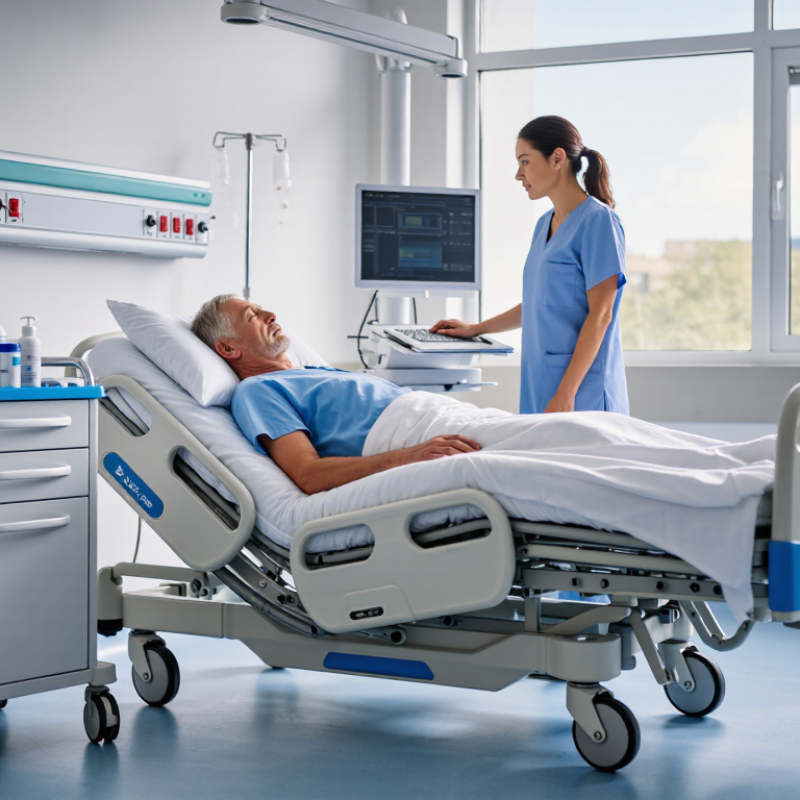
A lateral tilting bed is a powered support surface that gently turns a patient from side to side. It uses controlled movement rather than a sudden manual roll. The goal is to reduce prolonged pressure on the sacrum, hips, and heels. It may also support comfort, breathing, and safer repositioning for patients who need extensive assistance. The bed does not replace clinical judgment.
A practical 30° repositioning plan should follow an individual skin and mobility assessment. NPIAP guidance emphasizes repositioning based on tissue tolerance, health status, and support-surface performance. Staff may alternate between the back, left 30° tilt, and right 30° tilt. Each position needs a documented time, skin check, and comfort review. Keep heels floated when appropriate. Check oxygen tubing, catheters, drains, and limb alignment after every turn.
Small details matter. A tilted pelvis can create extra pressure. A loose sheet can cause shear. Stop the cycle if the patient reports pain, breathing difficulty, dizziness, or new redness. Some patients need shorter intervals, while others may tolerate longer periods. The 30° angle is a useful starting point, not a universal prescription. In practice, schedules sometimes look precise but fail when staff do not reassess the patient. That weakness deserves attention. Bed settings, caregiver technique, and patient response should be reviewed together.
Prevent Pressure Injuries Amid AHRQ’s 2.5 Million Annual U.S. Cases
AHRQ estimates that about 2.5 million U.S. patients develop pressure injuries annually. Lateral tilting beds can support prevention through controlled, repeatable repositioning. They shift pressure away from the sacrum, hips, and heels. They may also reduce shear during movement. Better weight distribution can protect fragile skin during long periods of immobility. Gentle turning may improve comfort, sleep, and patient cooperation. It can also reduce the physical strain placed on caregivers. Safer transfers become possible when the bed supports stable positioning. Finally, programmable angles can help teams follow individualized turning schedules. Yet technology alone cannot prevent every injury.
Tips: Confirm the patient’s skin risk before setting tilt angles. Begin with small movements and monitor tolerance. Check the sacrum, heels, elbows, and skin folds during every assessment. Use pillows or heel elevation when appropriate. Keep linens smooth and dry. Document angle, duration, skin response, and patient comfort. Stop and reassess if pain, dizziness, sliding, or breathing changes occur. A wound-care nurse or qualified clinician should guide complex cases.
A lateral tilt should complement, not replace, clinical judgment. Some patients need slower turns, extra support, or a different surface. A common mistake is trusting an automated schedule without checking the person underneath. Staff should review outcomes regularly and adjust the care plan. Pressure prevention works best when equipment, observation, nutrition, moisture control, and mobility planning work together. Small inconsistencies can still cause harm. That is worth reflecting on.
7 Best Ways Lateral Tilting Beds Improve Patient Care?
Support Pulmonary Care Against CDC’s 1-in-31 HAI Burden
The CDC reports that about one in 31 hospital patients has a healthcare-associated infection on any given day. Lateral tilting beds can support pulmonary care by changing a patient’s position gradually and safely. This movement may improve secretion drainage, reduce prolonged dependent-lung compression, and support more even ventilation. It can also assist airway clearance for patients with limited mobility. Small movements matter. For ventilated patients, controlled turning may reduce manual handling and help staff maintain scheduled repositioning. It may also support aspiration-risk management, oxygenation checks, pressure redistribution, and earlier sitting preparation.
Evidence remains practical, not magical. Research on continuous lateral rotation shows mixed results, especially across different patient groups. A bed cannot replace oral care, head-of-bed elevation, hand hygiene, suction assessment, or an established ventilator-associated pneumonia prevention bundle. CDC guidance and critical-care protocols still place these measures at the center of HAI prevention. Staff should assess blood pressure, oxygen saturation, tube position, skin condition, and patient tolerance during every movement.
Tips: Begin with small tilt angles and document the response. Keep lines visible during rotation. Recheck breath sounds after repositioning. Stop when distress appears. Review outcomes weekly, because a useful intervention can become routine without proving its value. Calibration and staff training also matter. Poorly fitted settings may create discomfort, shear, or false confidence.
7 Best Ways Lateral Tilting Beds Improve Patient Care?
Preserve Mobility, Comfort, and Alignment Through Progressive Tilting
Progressive lateral tilting supports seven practical care goals: mobility, comfort, alignment, pressure redistribution, shear reduction, respiratory positioning, and safer repositioning. A gradual tilt can move a patient from supine toward a 30-degree lateral position without abrupt rolling. This preserves body awareness and may reduce fear during care. Neutral head, shoulder, and pelvic alignment also helps limit twisting around the spine and hips. However, the bed cannot replace skilled assessment. Patient tolerance varies considerably.
Pressure injury prevention deserves careful attention. The 2019 International Guideline recommends individualized repositioning based on mobility, skin condition, and tissue tolerance. A 2020 Cochrane review found insufficient evidence to identify one superior repositioning schedule. That uncertainty matters. It encourages clinicians to inspect sacrum, heels, shoulders, and device contact points after each progression. A 2015 AHRQ HCUP report found pressure ulcers documented in 1.6% of United States hospital stays in 2011, showing why consistent prevention remains important. Progressive tilting may also support chest expansion and secretion management, but respiratory status must guide the angle.
Tips: Begin with small changes, then pause. Check facial tension, pain, oxygenation, skin color, and pelvic position. Use pillows only when they maintain alignment, not when they hide a poor fit. Record the tolerated angle and response. Reassess after procedures, meals, and sleep. The most comfortable position may still need correction.
Lateral tilting beds can reduce manual-handling risks when used with trained staff and a clear care plan. OSHA’s safe patient-handling principles encourage reducing forceful lifting, awkward postures, and unnecessary transfers. A controlled side tilt can help nurses reposition a patient without repeated pulling across the mattress. It may also support safer hygiene, dressing changes, and linen replacement.
Care teams can track seven patient-care outcomes: pressure-injury risk, pain scores, breathing comfort, secretion clearance, sleep quality, fall or near-fall events, and participation in daily care. Record each measure before and after routine tilting. Small changes matter. For example, a patient may breathe more comfortably after a gentle turn, while another may report anxiety or increased pain. The bed does not replace clinical judgment.
Staff should check lines, drains, tubes, footwear, and skin folds before movement. A slow tilt may protect a fragile shoulder, but poor positioning can still create shear or sliding. That risk deserves honest review. Some patients need extra pillows, a second caregiver, or a different repositioning method. Weekly audits can compare assistance levels, staff strain reports, missed turns, and patient feedback. These records give nurses, therapists, and safety leaders practical evidence for adjusting care plans. When documentation is specific, manual-handling improvements become measurable rather than assumed.
It is a powered bed that gently turns a patient from side to side. The movement is controlled. It avoids sudden manual rolling and may reduce pressure on the sacrum, hips, and heels.
Staff may alternate between the back, a left 30° tilt, and a right 30° tilt. Record each position and its time. Check skin, comfort, tubing, drains, and limb alignment after every turn.
No. It is a starting point, not a universal prescription. Adjust the angle and interval according to skin tolerance, mobility, breathing, and overall health.
Inspect the sacrum, hips, heels, and other pressure-prone areas. Look for new redness, warmth, swelling, or discomfort. A tilted pelvis or loose sheet may create extra pressure and shear.
Gradual turning may support secretion drainage and more even lung ventilation. It can reduce prolonged compression of one dependent lung. Recheck oxygen saturation, breath sounds, and tube position after movement.
No. It may support safer movement and scheduled repositioning. It does not replace hand hygiene, oral care, suction assessment, or head-of-bed elevation.
Stop if the patient reports pain, dizziness, breathing difficulty, or new redness. Pause when oxygen levels or blood pressure become concerning. Check every line and device before continuing.
Poor settings may cause discomfort, shear, or unsafe pressure. Staff may follow a precise schedule without reassessing the patient. That assumption can fail. Review settings, technique, and patient response together.
Lateral tilting beds are designed to gently rotate patients from side to side, helping caregivers follow a structured 30° repositioning plan recommended for pressure injury prevention. How does a lateral tilting bed help with patient care? It distributes pressure more evenly, supports skin protection, and may reduce the risk associated with prolonged immobility, especially given the millions of pressure injuries reported annually in the United States. Controlled positioning can also assist pulmonary care by promoting better posture, secretion movement, and ventilation for patients vulnerable to healthcare-associated infections.
Progressive tilting supports comfort, body alignment, and gradual mobility while reducing the physical strain of repeated manual repositioning. By limiting unnecessary lifting and twisting, it may help protect caregivers from handling-related injuries. Care teams can also track outcomes such as skin condition, respiratory status, comfort, alignment, mobility, repositioning consistency, and caregiver workload. With individualized settings and regular monitoring, lateral tilting beds can become a practical part of a comprehensive patient-care plan.

Reef Medical