Knockdown hospital beds arrive in sections, so safe assembly means more than joining a frame. Designs vary: caster brakes, side rails, actuator plugs, and fasteners differ by model. How to assemble a knockdown hospital bed begins with checking the exact model label and using its current manufacturer instructions. Do not rely on a similar-looking bed. Small details matter.
Published safety data gives this task wider context. The World Health Organization’s Global Report on Infection Prevention and Control (2022) estimates that about 7 in 100 patients in high-income acute-care hospitals acquire at least one healthcare-associated infection. In low- and middle-income countries, its estimate is 15 in 100. These figures do not measure bed assembly, but they underline the importance of cleanable, well-maintained care equipment. The U.S. Food and Drug Administration’s Hospital Bed System Dimensional and Assessment Guidance (2006) highlights entrapment risks around gaps between mattresses, rails, and frames. Use it as context, not as a substitute for the bed’s instructions.
This guide covers unpacking, identifying parts, joining the frame, connecting powered components, and checking brakes and rails before use. Expect to compare bolt lengths, route cables away from moving joints, and test each caster on a level floor. A qualified technician should handle unclear electrical connections or damaged components. A square frame is not proof of a safe bed. That distinction is easy to miss.
Verify the Model-Specific Parts List and Required Tools Before Assembly
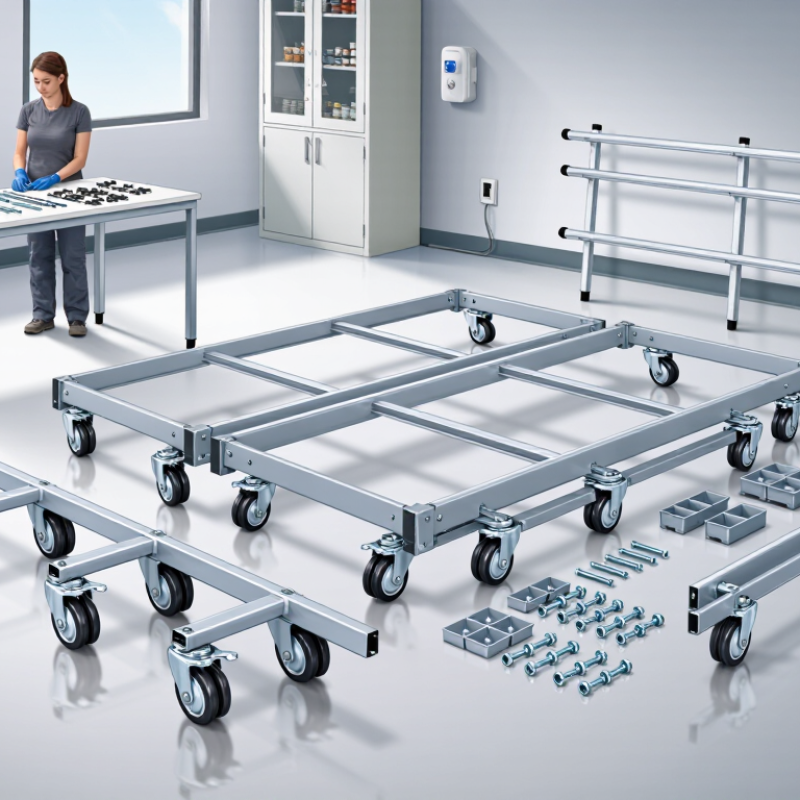
Before assembling a knockdown hospital bed, match the parts list to the exact model and configuration. Check the frame label, manual revision, and parts diagram. Then lay out the head and foot panels, side rails, casters, drive components, and fasteners. Count every washer and spacer; similar-looking bolts may have different lengths or thread patterns. Don’t substitute hardware by appearance. A missing spacer matters.
Set out only the tools the manual specifies, such as correctly sized wrenches, hex keys, and a torque wrench when a torque value is provided. Keep an impact driver aside unless the instructions permit it. Disconnect power before fitting electrical components, and keep small parts in labeled groups. The U.S. Bureau of Labor Statistics reported 5.5 nonfatal injury and illness cases per 100 full-time workers in hospitals in 2022 (Employer-Reported Workplace Injuries and Illnesses, 2022). Careful handling and a clear work area are practical safeguards, not paperwork.
A complete-looking pile can still hide one absent washer. Stop and recount instead of improvising. Assemble the frame in the sequence shown, tighten fasteners to the stated specification, and confirm that rails lock and casters brake. Test height and positioning functions without a patient, following the manual. Record any mismatch and resolve it before use.
Build the Base Frame and Lock Each Caster Before Raising the Bed
Start on a clean, level floor and lay out the base rails, cross-members, bolts, and casters. Check the assembly manual for the correct orientation; left and right pieces can look deceptively similar. Fit the frame joints loosely first, then tighten fasteners in the specified order and to the stated torque. Do not guess. Attach each caster fully, and confirm its brake engages and releases without sticking. Small parts matter. A loose caster stem or uneven rail can make the frame rock when weight is added. It is easy to rush this step, especially when the bed looks nearly complete.
Before raising the bed, lock every caster and check that the frame sits level. Apply gentle pressure at each corner; movement or wobble means the joints need inspection. Raise the bed only as directed in its manual, keeping hands clear of moving sections. The Agency for Healthcare Research and Quality’s Preventing Falls in Hospitals toolkit estimates 700,000 to 1,000,000 hospital falls occur annually in the United States. That estimate is not specific to bed assembly, but it underscores why stable equipment and careful checks matter. Record any damaged parts, and do not use the bed until they are replaced and the frame passes another stability check.
How to Assemble a Knockdown Hospital Bed in 2026: Build the Base Frame and Lock Each Caster Before Raising the Bed
Build the base frame on a stable surface, then lock each caster before raising the bed. The chart illustrates a four-caster locking sequence; check your bed’s instructions, as configurations can vary.
Attach the Bed Deck and End Panels Following IEC 60601-2-52 Safety Guidance
Before assembling a knockdown hospital bed, identify the deck, head panel, and foot panel by their labels. IEC 60601-2-52 sets safety and essential-performance requirements for medical beds, including considerations related to patient entrapment. It does not replace the bed’s assembly instructions. Keep the frame on a level floor. Check that each panel matches the correct end before fastening.
Seat the deck rails fully into the end-panel brackets, then install the supplied fasteners in the specified order. Tighten them to the manufacturer’s stated torque; guessing is not a safe substitute. The U.S. FDA’s 2013 hospital-bed guidance reviewed 901 reported entrapment incidents from 1985 through January 2013, including 531 deaths. These historical reports are not a current risk rate, but they show why secure connections and correct bed configuration matter. No shortcuts.
After assembly, inspect both panel joints for movement, missing hardware, or exposed sharp edges. Lock the casters and apply gentle pressure to the deck to check for rocking. Lower and raise the deck through its full range, watching for cable snags and shifting gaps near the panels. A visually tidy joint can still be misaligned. Recheck the fasteners after testing, and record any defect rather than placing the bed into service. Follow the model-specific instructions whenever they differ from general assembly practice.
Connect the Actuators and Handset, Keeping Cables Clear of Moving Parts
With the bed unplugged, connect each actuator and the handset to its matching socket, following the wiring diagram. Align plug keys before insertion; never force a connector. A fully seated plug should feel secure, not strained. Route cables along the frame, away from hinges, caster wheels, and the lifting mechanism. Leave enough slack for the bed to reach its highest and lowest positions without pulling on connectors.
Before testing, check the entire cable path while moving parts are still. WHO’s Global Patient Safety Report 2024 estimates that about one in ten patients experiences harm in healthcare, with over half of harm considered preventable. That figure is not specific to bed assembly, but it supports careful, repeatable safety checks. Raise and lower the bed with no load, watching for pinching, scraping, or a cable that tightens near a joint. Stop and reroute if anything catches. A quiet test is reassuring, but it is not proof that every cable is clear.
Tips: Use the handset to test each function separately. Keep cables out of the scissor mechanism, and secure loose runs with the supplied clips. Recheck after repositioning the bed. It’s easy to miss a snag when looking only from above.
Test Bed Movement and Check the FDA’s 7 Entrapment Zones Before Use
After assembling a knockdown hospital bed, test its movement before anyone uses it. With the bed unoccupied, lock and release each caster, then raise and lower the deck through its full range. Check that the frame moves smoothly, stays level, and makes no unexpected contact with cables or nearby equipment. Confirm rails latch securely and remain clear of the mattress. A brief visual check feels reassuring, but it can miss a narrow gap.
The FDA’s 2006 Hospital Bed System Dimensional and Assessment Guidance identifies seven potential entrapment zones around rails, mattresses, and bed ends. The guidance reports 691 entrapment incidents from 1985 through 2005, including 413 deaths. Check all seven zones with the specified assessment methods, using the actual mattress and rail configuration. Pay close attention to gaps that change as the deck moves. If a gap appears, or a rail shifts, stop and correct the setup before use. Follow the bed’s assembly instructions; do not improvise with padding or parts.
Tips: Keep the area clear. Test every motion control. Recheck rail latches and caster locks after movement. Record any fault and ask a qualified technician to assess it. I would not rely on “it looks fine” as a safety check.
FAQS
Match the parts list to the exact bed model and configuration. Check the frame label, manual revision, and parts diagram. Count washers and spacers carefully. Similar bolts may differ in length or threading.
Use only the tools specified in the manual, such as correctly sized wrenches or hex keys. Use a torque wrench when the instructions give a torque value. Leave power tools aside unless permitted.
Work on a clean, level floor. Check the orientation of each rail and cross-member. Fit the joints loosely, then tighten them in the stated order and to the specified torque. Don’t guess.
Attach each caster fully and test that its brake engages and releases. Lock all casters before raising the bed. Press gently at each corner; any rocking needs inspection.
Identify the deck, head panel, and foot panel by their labels. Seat the deck rails fully in the correct brackets, then install the supplied fasteners in order. No shortcuts.
Look for movement, missing hardware, or sharp edges. Apply gentle pressure to the deck and check for rocking. A neat-looking joint can still be misaligned.
Disconnect power before fitting electrical components. After assembly, follow the manual to test height and positioning functions without a patient. Watch for cable snags or shifting gaps.
Stop and recount the parts rather than improvising. Record any mismatch or damage, replace defective parts, and repeat the stability check before use. It is easy to rush when the bed looks nearly complete.
Conclusion
How to assemble a knockdown hospital bed begins with careful preparation. Confirm that every component matches the bed’s model-specific parts list, and gather the required tools before starting. Build the base frame on a stable, level surface, then lock each caster so the bed cannot roll while you work. Attach the bed deck and end panels in the sequence specified by the instructions, checking that all fasteners are secure and that the assembly follows relevant IEC 60601-2-52 safety guidance.
Next, connect the actuators and handset, routing cables away from joints and other moving parts to reduce the risk of pinching or damage. Before the bed is used, test each movement through its full range and listen or look for signs of interference. Inspect the FDA’s seven bed entrapment zones, paying particular attention to gaps around the mattress, rails, and end panels. If any part is loose, movement is obstructed, or a gap appears unsafe, stop and correct the issue before placing the bed into service.

 Reef Medical