What Is the Standard Size of a Hospital Bed 5 Tips?

Time:2026-10-20 Author:Sophia
0%

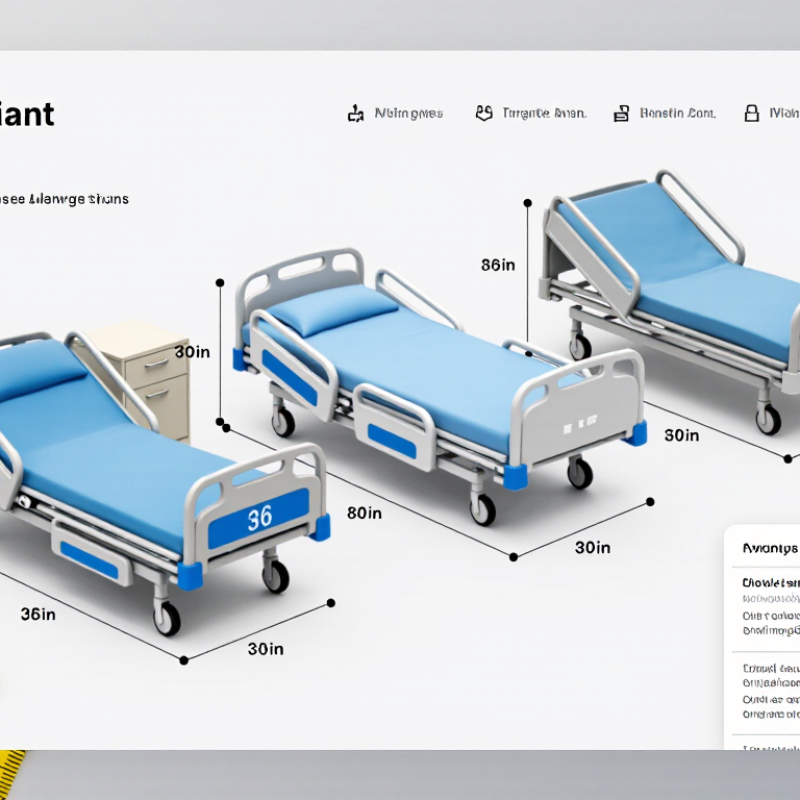
What is the standard size of a hospital bed? In many hospitals, a standard bed is about 36 inches wide and 80 inches long. Its overall length may reach 84 inches with the frame and headboard. However, measurements vary between manufacturers, care settings, and bed functions. A home-care bed may have different proportions from an intensive-care model. This difference matters when planning a room, doorway, lift, or bedside table.

This guide explains five practical tips for identifying the right hospital bed size. It considers mattress dimensions, frame clearance, adjustable height, patient weight, and room access. A tape measure helps, but it is not enough. Check the product drawing and the manufacturer’s technical specifications. Clinical procurement teams should also confirm facility requirements before ordering equipment. Small details matter. For example, side rails can add several inches to the usable width.

A wider bariatric bed may improve comfort and support, but it needs more floor space. A narrow bed may fit a small room, yet restrict movement for larger patients or caregivers. These trade-offs deserve careful thought. Standard dimensions are useful guidelines, not universal rules. Some online sources present one measurement as definitive, which can be misleading. In practice, nurses, occupational therapists, and equipment specialists often assess the patient, mattress, transfer needs, and surrounding clearance together. That approach is more reliable. Always verify current specifications before purchase, installation, or clinical use.
What Is the Standard Size of a Hospital Bed 5 Tips?

Standard Hospital Bed Dimensions and Common Size Ranges

A hospital bed does not have one universal size. The mattress is commonly about 36 inches wide and 80 inches long, or approximately 91 by 203 centimeters. Some models use a 36-by-84-inch sleeping surface for taller patients. The full frame is usually wider and longer, often measuring 38 to 40 inches wide and 84 to 90 inches long. A neat number can still be wrong.

Use five practical checks before choosing a bed.

Measure the mattress, frame, lowest height, highest height, and required clearance. Many adjustable beds range from about 16 to 30 inches high, excluding the mattress. Leave space for side rails, cables, oxygen equipment, and staff movement. Doorways and elevators need attention too.

Planning note I have seen room plans fail because only the mattress was measured.

Patient needs can change the size range. Bariatric beds may exceed 48 inches in width and require stronger floors and wider access routes. Pediatric beds are usually shorter and include extra protective features. Check whether the stated dimensions include rails, wheels, and attached equipment. They often do not.

A tape measure helps, but it cannot replace clinical judgment. Confirm the figures with the facility’s equipment specialist and current safety requirements. Even then, allow a small tolerance for walls, bedding, and imperfect installation.

Key Measurements: Length, Width, Height, and Weight Capacity

What Is the Standard Size of a Hospital Bed? 5 Tips

A typical adult hospital bed is about 36 inches wide and 80 inches long. Its overall length may reach 84 to 90 inches after adding the headboard and footboard. Height usually adjusts from roughly 16 to 30 inches, helping staff transfer patients safely. However, these figures are common specifications, not a universal rule.

Weight capacity requires closer attention. Many standard beds support approximately 450 to 500 pounds, including the patient, mattress, and accessories. Bariatric models can support considerably more, but their wider frames need additional room. IEC 60601-2-52:2009+A1:2015 sets safety and performance requirements for medical beds, yet it does not establish one global exterior size. That detail is often misunderstood.

Room planning matters as much as the frame. The 2022 Facility Guidelines Institute guidelines emphasize usable clearances around patient beds, rather than one fixed bed footprint. A 36-inch bed can still become difficult to use when rails, pumps, wheelchairs, or oxygen equipment occupy the same space. In practice, I would measure the mattress platform, fully raised rails, and lowest height. My first assumption was that “standard” meant identical everywhere. It does not. Older wards may also have narrower doorways, creating an overlooked installation problem. Always compare supplier specifications with facility measurements and the patient’s handling needs.

Differences Between Standard, Bariatric, Pediatric, and Home Beds

What Is the Standard Size of a Hospital Bed? 5 Tips

A standard hospital bed usually measures about 36 inches wide and 80 inches long. Some frames extend to 84 inches for taller patients. Mattress size is not the full footprint. Rails, controls, and casters add several inches. The 2022 Facility Guidelines Institute Guidelines emphasize usable clearances around beds, not only mattress dimensions. In practice, a room may feel crowded even when the bed technically fits.

Bariatric beds are wider and stronger. Common widths range from 42 to 54 inches, with weight capacities often between 500 and 1,000 pounds. Pediatric beds are shorter, narrower, and surrounded by higher safety sides. Their design supports smaller bodies, caregiver access, and fall prevention.

The U.S. Food and Drug Administration’s hospital-bed safety guidance stresses compatible mattresses, rails, and frames. Size alone does not guarantee safety.

Home-care beds often use a 36-by-80-inch mattress, but their frames may differ from hospital models. Some include removable rails or reduced-height settings. Door width, turning space, flooring, and caregiver reach matter greatly. Measure the bedroom, hallway, and bathroom first. A rushed measurement is a costly mistake.

The FDA guidance also warns that mismatched components can create entrapment hazards. Standards help, but they do not replace an individual assessment. Even a “standard” bed may need a different length, height, or support surface.

Five Tips for Choosing the Right Hospital Bed Size

A standard adult hospital bed is commonly about 36 inches wide and 80 inches long, or 91 by 203 centimeters. However, dimensions vary by model, mattress thickness, side rails, and extension features. IEC 60601-2-52 focuses on medical-bed safety, entrapment prevention, and clearances, rather than one universal bed size. The 2024 American Hospital Association Hospital Statistics report recorded 919,649 staffed beds in the United States in 2022. That scale reflects different room layouts and patient needs.

Measure the room first. Leave enough space for staff, transfers, and emergency equipment. A bed may fit, but the door may not. Check the mattress platform, not only the outer frame. A 36-inch bed can become wider with rails and controls. Match length and width to the patient’s height, weight, and turning needs. Bariatric patients may require a wider reinforced surface and a higher safe working load. Review the manufacturer’s technical data carefully. Never estimate.

Consider transport routes, including elevators and sharp hallway turns. Check height adjustment, because low access supports safer transfers. Confirm electrical outlet location and clearance from walls. Ask nurses and clinical engineers about cleaning access, brake controls, and daily handling. A 2023 AHRQ patient-safety report emphasizes that equipment design and work environment influence preventable harm. Smaller rooms may need a shorter frame, but that choice can reduce comfort. I would reconsider any purchase based only on nominal dimensions. The overlooked detail is usually the space around the bed.

What Is the Standard Size of a Hospital Bed 5 Tips? - Five Tips for Choosing the Right Hospital Bed Size

Typical Hospital Bed Dimensions and Selection Guidelines
Bed Size or Selection Factor Typical Measurement or Requirement Practical Guidance Why It Matters
1. Standard adult hospital bed Mattress: approximately 36 in × 80 in (91 cm × 203 cm). Overall bed length is commonly about 84–90 in (213–229 cm), depending on the frame and accessories. Use this size for most average-sized adults when the room, mattress, and care requirements are typical. It provides a common balance of sleeping surface, maneuverability, and compatibility with standard hospital bedding.
2. Extended-length bed Mattress length is commonly about 84 in (213 cm), while width is often around 36 in (91 cm). Consider an extended length for taller users, but confirm the patient’s height and the manufacturer’s mattress specifications. Additional length can reduce foot overhang and improve comfort without substantially increasing bed width.
3. Bariatric hospital bed Mattress width is commonly about 42–48 in (107–122 cm). Available length and safe working load vary by model. Choose a bariatric configuration only after checking the patient’s width, weight, transfer needs, and the bed’s rated safe working load. The wider platform improves stability and comfort, while the correct load rating supports safer care.
4. Room and access clearance Allow space for staff, transfers, side-rail operation, equipment, and door movement. Measure the fully assembled bed, including rails and accessories. Measure doorways, corridors, elevators, turning areas, and the final room before ordering or installing the bed. A bed that fits the mattress area may still be difficult to deliver, move, or use safely in a crowded room.
5. Mattress and accessory compatibility The mattress must match the bed deck’s length, width, thickness, and attachment requirements. Rails, lifts, IV poles, and overbed tables also affect the usable space. Confirm every accessory’s dimensions and compatibility instead of selecting a mattress based on nominal size alone. Correct fit helps reduce gaps, movement, pressure points, and interference with bed adjustments.
Patient height and body position Select a surface long enough for the patient’s height and wide enough for normal repositioning, while following clinical assessment guidance. Evaluate sleeping posture, turning ability, mobility, and whether the patient will require frequent assisted repositioning. Size affects comfort, positioning, fall-prevention practices, and the caregiver’s working space.

Measurements are typical industry ranges rather than universal specifications. Always verify the exact bed, mattress, safe working load, clearances, and applicable clinical or facility requirements before purchase or use.

How Room Layout and Patient Needs Affect Bed Selection

What Is the Standard Size of a Hospital Bed? 5 Tips

How Room Layout and Patient Needs Affect Bed Selection

A hospital bed usually has a sleeping surface about 36 inches wide and 80 inches long. Its full length may reach 90 to 100 inches with the head and foot sections raised. Actual dimensions vary by function, adjustment range, and side-rail design. Measure the room, not just the mattress. A neat floor plan can still fail when staff need to turn a mobile lift beside the bed.

Tip: Leave practical working space around the bed. Many care areas need clear access on both sides, especially for transfers, dressing changes, and emergency movement. Door swings, wall equipment, curtains, and bedside tables can reduce that space quickly. Mark the bed’s full raised position on the floor before installation. It is a simple test, but often overlooked.

Patient needs should guide the selection. A taller patient may require an extended sleeping surface. Someone with limited mobility may benefit from height adjustment and supportive rails. A heavier patient may need a wider frame and a verified safe working load. Consider walking aids, oxygen equipment, and caregiver access, too. Small details matter.

Tip: Check turning space and reach distance. A bed that fits tightly may still be unsafe for daily care. Local accessibility rules and facility policies should also be reviewed by qualified professionals. I would not rely on a standard size alone; room measurements and patient assessments can reveal uncomfortable mistakes before delivery.

What Is the Standard Size of a Hospital Bed?

A typical adult hospital bed mattress is about 36 inches wide and 80 inches long. Bariatric beds are wider to support higher patient weights, while pediatric beds are shorter and narrower. Room layout, transfer space, mobility equipment, and patient needs should be considered before selecting a bed.

Dimensions shown are representative mattress sizes in inches; actual bed frames and clearance requirements vary by model and healthcare facility.

FAQS

What is the usual size of a standard hospital bed?

The sleeping surface is usually about 36 inches wide and 80 inches long. Some frames extend to 84 inches. The full footprint is larger.

Why should I measure more than the mattress?

Rails, controls, casters, and raised sections add space. Measure the bedroom, hallway, bathroom, and door openings. Measure everything.

How much clearance does a hospital bed need?

Care areas need practical access on both sides. Staff may need room for transfers, dressing changes, or mobile lifts. Door swings and tables can quickly reduce clearance.

How can room layout affect bed selection?

Mark the bed’s full raised position on the floor before installation. Check turning space for equipment and walking aids. A tidy floor plan can still fail.

When is a bariatric bed more suitable?

A bariatric bed usually measures 42 to 54 inches wide. Its safe working load often ranges from 500 to 1,000 pounds. Verify the patient’s needs and frame capacity.

What makes a pediatric bed different?

Pediatric beds are shorter and narrower. Higher safety sides help reduce falls. The design also supports caregiver access and smaller bodies.

What should I consider for a home-care bed?

Home-care beds may use a 36-by-80-inch mattress. Their frames can differ from hospital models. Check flooring, door width, bathroom access, and caregiver reach.

Can mismatched bed parts create safety problems?

Yes. Incompatible mattresses, rails, or frames may create gaps and entrapment hazards. Size alone does not guarantee safety. An individual assessment remains necessary.

How should patient needs guide bed selection?

Taller patients may need an extended sleeping surface. Limited mobility may require height adjustment and supportive rails. Heavier patients may need a wider frame and verified capacity.

Is a standard bed always the best choice?

Not necessarily. A standard bed may fit on paper but feel crowded in practice. I would not rely on dimensions alone. Small mistakes become costly later.

Conclusion

What is the standard size of a hospital bed? A typical hospital bed is about 36 inches wide and 80 inches long, although dimensions may vary by model and purpose. Its adjustable height usually supports easier patient care, transfers, and cleaning, while weight capacity is an equally important measurement. Standard beds are designed for most adults, whereas bariatric beds provide extra width and stronger support. Pediatric beds are smaller and include safety features suited to children, while home-care beds may be more compact to fit residential spaces.

When choosing a hospital bed, consider five key factors: patient height and weight, required weight capacity, available room space, mattress and accessory compatibility, and the bed’s adjustment functions. Room layout should allow enough clearance for caregivers, equipment, and safe movement around the bed. Patient mobility, medical needs, transfer requirements, and long-term comfort should also guide the selection. The right size balances safety, functionality, comfort, and efficient use of space.

Sophia

Sophia

Sophia is a dedicated marketing professional with an exceptional depth of knowledge about her company's products and services. With a keen understanding of market trends and customer needs, she crafts insightful blog posts that not only inform but also engage readers, enriching the company’s online......