Why are castors and brakes critical for medical beds? Because a bed must move smoothly when staff reposition it, then remain stable when a patient transfers, rests, or receives care. A loose wheel can make a bed drift. A brake that fails to hold can turn a routine transfer into a fall risk. Small components. Serious consequences.
The World Health Organization’s Global Report on Falls Prevention in Older Age reports that 28–35% of people aged 65 and older fall each year; rates rise with age. These figures describe falls generally, not incidents caused by bed castors or brakes. That distinction matters. Still, they underline why bedside stability deserves attention. The IEC 60601-2-52 standard also sets safety and performance requirements for medical beds, reinforcing the need to assess the whole bed system, including its mobility and locking functions.
Castor quality is only part of the picture. Brake engagement, wheel wear, floor condition, bed load, and staff checks all affect real-world performance. A brake may feel firm yet fail to hold on a sloped or uneven surface. Not every ward is the same. No single inspection routine fits every situation.
The material provided contains no verifiable named specialist quotation on this specific topic, so attributing one would risk misleading readers. A direct expert quote should be added only when its source can be checked.
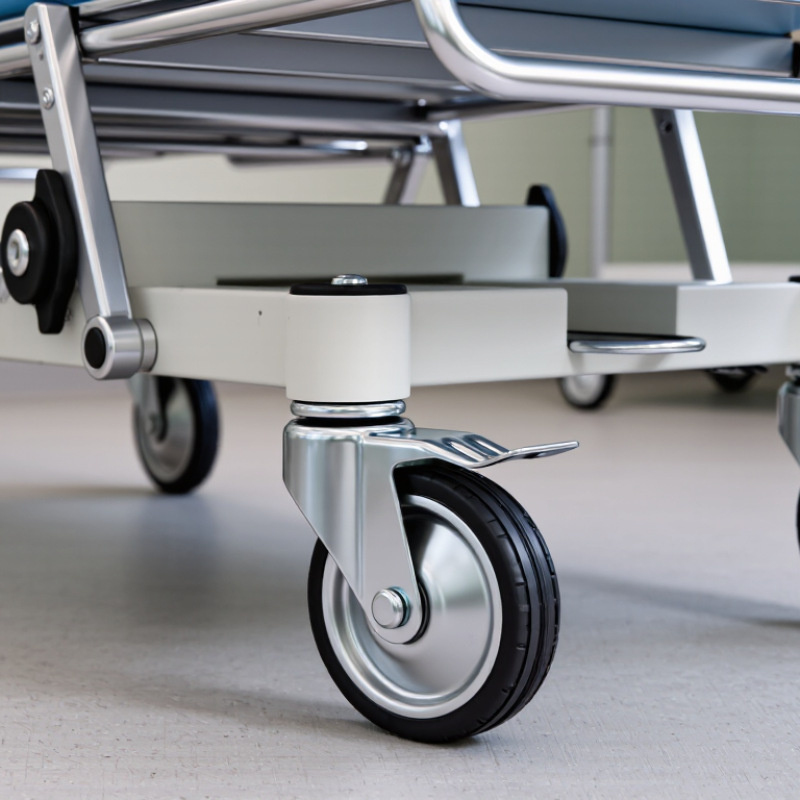
Medical bed castors are wheel assemblies fitted to a bed’s frame. They let staff move the bed through corridors, around corners, and beside other equipment. Each castor typically includes a wheel, a swivel joint, and a mounting point. Designs differ, so the word “castor” does not guarantee identical movement or load capacity.
Brakes hold the bed in place when care begins. Depending on the design, a brake may stop wheel rotation, swivel movement, or both. Staff should check that the brake engages fully and that the bed stays still under gentle pressure. A small test helps. A brake pedal can look engaged while one wheel remains free.
AHRQ’s Preventing Falls in Hospitals reports that 700,000 to 1 million hospitalized patients fall each year in the United States. This estimate covers many causes; it does not show that bed movement causes those falls. Still, secure castors matter when patients sit down, stand up, or shift their weight. The FDA’s Hospital Bed System Dimensional and Assessment Guidance to Reduce Entrapment also highlights bed-system design and component fit. These details are easy to overlook during a busy shift. Checking the castors and brakes is useful, but it cannot replace an individual patient-risk assessment.
| Feature or Component | What It Is | Why It Is Critical | Practical Check |
|---|---|---|---|
| Medical bed castor | A wheel assembly attached to the bed frame that allows the bed to be moved. | Supports controlled movement during repositioning, cleaning, and transfers between care areas. | Check that each wheel rolls smoothly and that the assembly is securely attached. |
| Brake or wheel lock | A mechanism that prevents one or more castors from rolling when engaged. | Helps keep the bed stationary during patient transfers, bedside care, and other tasks where movement could create a hazard. | Engage the brake and gently test whether the bed remains in place; follow the bed’s instructions for use. |
| Central locking system | A linked mechanism that lets a caregiver apply or release locks at multiple castors from a shared control. | Can make it easier to secure the bed consistently, especially when several wheels need to be locked together. | Confirm that the control moves freely and that all connected locks respond as intended. |
| Directional lock | A setting that restricts swivelling on a castor so the bed tracks more predictably in a chosen direction. | Can improve maneuverability when moving a bed along corridors or through doorways. | Check that the castor swivels freely when unlocked and tracks as intended when the directional setting is applied. |
| Castor load rating | The load limit specified for a castor or bed assembly by its manufacturer. | Using components beyond their stated capacity can compromise safe movement and equipment performance. | Verify the bed’s specified safe working load and use only compatible replacement castors rated for the application. |
| Wheel material and size | Physical properties that affect rolling, floor contact, and compatibility with the bed. | Suitable castors can support easier movement and help reduce unwanted marking or damage to compatible flooring. | Choose replacements according to the bed and floor requirements; do not assume different castors are interchangeable. |
| Swivel and bearing condition | The movement of the wheel around its axle and the castor around its swivel joint. | Stiff, noisy, or obstructed castors can make a bed harder to steer and may indicate wear or contamination. | Inspect for hair, debris, looseness, damage, and restricted movement as part of routine equipment checks. |
| Brake inspection and maintenance | Routine checks and servicing of the brake linkage, pedals, and locking parts. | A brake that is damaged, obstructed, or not fully engaging may fail to hold the bed as intended. | Follow the facility’s maintenance schedule and the equipment instructions; remove faulty equipment from service according to local policy. |
| Cleaning and infection-control compatibility | Compatibility of castor materials and mechanisms with approved cleaning products and procedures. | Castors are near the floor and can collect dirt and debris; cleaning supports equipment hygiene and reliable operation. | Use only cleaning methods and products permitted by the bed manufacturer and facility policy; dry and inspect parts as directed. |
| Safe bed positioning | Using the brakes and castors in accordance with the bed’s instructions and the care task being performed. | Correct positioning helps reduce unintended bed movement during care and transfers. | Before a task, confirm the bed is positioned appropriately and its brakes are applied when required by the instructions and care protocol. |
Note: Castor design, brake operation, load limits, and inspection procedures vary by bed model. Always follow the equipment instructions and applicable facility procedures.
They help keep the bed from rolling while a patient turns, transfers, or receives hands-on care. Small shifts matter.
Use the brake lever or indicator, then gently test the bed for movement. A half-pressed pedal may not hold securely.
Check before examinations, dressing changes, repositioning, and transfers between a bed and chair. Repeat the check if the bed moves.
No. Brakes reduce rolling but cannot fix an uneven floor or poor bed positioning. A wheel may still slip.
Look for cracked housings, loose fasteners, uneven rolling, worn wheels, or a pedal that fails to hold. Hair and debris can interfere too.
Document the defect and remove the bed from use until it is assessed. A quick visual check is not enough.
A shifting frame can make it harder for a patient to sit, stand, or lean safely. It may increase fall risk, though not every fall involves bed brakes.
It can feel repetitive, especially in a busy room. Still, a gentle movement test before transfer is a useful habit. Perhaps more than it seems.
Medical bed castors are wheeled components that let caregivers move a bed smoothly and position it where care is needed. Their design can support controlled movement through clinical spaces while helping staff adjust a bed’s location with less effort. Brakes work alongside the castors by preventing unwanted movement once the bed is in place. Together, these parts make it easier to reposition a bed when necessary and keep it steady during transfers, examinations, and everyday care.
Why are castors and brakes critical for medical beds? Reliable movement and secure locking help reduce the risk of a bed rolling unexpectedly, which could create hazards for patients and caregivers. Faulty castors or brakes, or brakes left unlocked, can compromise stability. Regular checks can help identify worn wheels, damaged locking mechanisms, or other performance issues. Keeping castors clean, testing the brakes, and arranging timely repairs supports dependable operation and helps maintain a safer care environment.

 Reef Medical